We are delighted to be working with the Wessex Rivers Trust to bring you exclusive chalk stream fly fishing on the famous Oakley, Rectory, and Dun beats at Mottisfont Abbey on the River Test.
This is a unique and exciting opportunity to fish in the footsteps of the great F.M. Halford, one of the founding fathers of modern fly fishing, and to visit the epicentre of it all at Mottisfont Abbey. It was here on these very riverbanks that Halford developed the techniques that formed the bedrock of upstream dry fly fishing as we know it. Today, his work at Mottisfont lives on to inspire hundreds of thousands of fly fishers around the world to take up this fabulous way of life.
Since 2023, the Wessex Rivers Trust have been working alongside the National Trust, the custodians of these fabled stretches of the River Test, to restore and enhance habitat for wild trout and the plethora of wildlife that call the chalkstreams their home. In addition to a series of comprehensive restoration projects, complimented with some light fishery management, the National Trust have implemented a no stocking policy, which means when you spot that special fish rising happily under the trees, there is every chance it is a truly wild chalkstream trout. Think of fallen oaks, dense undergrowth, and wild brown trout drifting over bright gravels, slurping up wriggling gnats. This is chalkstream fly fishing in its most exciting and primitive form.
Book today and step back in time in the Oakley fishing hut, where you can sit as Halford once did looking out over his river and tying his flies to match the evening rise.
When you fish at Mottisfont, you will have private and exclusive use of all three beats: Oakley, Rectory, and the Dun, with space for up to 4 rods. The famous Oakley fishing hut, with table and chairs, and ample parking, is the perfect place to base your group for the day. From there the place is yours to roam as you please, with all three beats within a 5-minute drive.
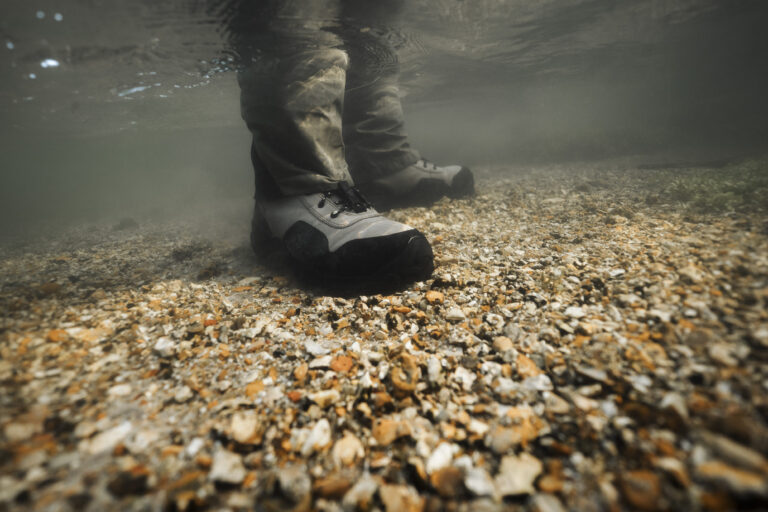
For long-time Mottisfont veterans, and those used to more traditionally managed reaches of the River Test, it is important to know that the style and difficulty of the fishing has much changed since your last visit. The river here is being managed with habitat quality and diversity in mind, so you can expect lots of woody debris, and marginal vegetation, making it a haven for wild brown trout and a true playground for the discerning fly fisher. Wading, where permitted, is encouraged to help you explore the beats to the fullest extent.
The fishing pressure is deliberately light, meaning there are only a limited number of days available for fishing during the season. With only three fishing days available each week, and never two days in a row, you can be assured that that the water remains well-rested when you arrive.
The fishing is, by its own nature, trickier and more rewarding than ever before, that is why we recommend you take one of our friendly, knowledgeable, and fully qualified Fishing Guides to accompany you and help make the most of your special day.
The Oakley beat is perhaps the most famous fly fishing beat anywhere on the River Test. It was here that F.M. Halford would sit in his fishing cabin overlooking the river and send his riverkeeper to capture a mayfly dun as it hatched off the surface. The river keeper would present his catch in the clasp of his hands, then Halford would study it and tie his own pattern in anticipation of the evening rise.
This is the place to base yourselves for your day. Gather at the hut here in the morning for teas and coffees and reconvene back here for the lunch. The Oakley cabin has electricity, fresh drinking water, and ample seating inside and out.
The newly restored Oakley beat has been revived with habitat that provides everything a wild trout needs. The first thing that strikes you is the diversity of tree cover, wooded debris, deep fast scours, and slow open glides. You will require a good range of techniques in order to make the most of every step as you wade upstream, so short line overhead and roll casts, and even the bow and arrow cast, may be useful when those big wild trout hold in the hard-to-reach places.
Oakley enjoys terrific fly life, and when the season opens in April the hatch calendar turns to grannom, Hawthorn, and large dark olive, but the wild trout wait until the mayfly before they throw caution to the wind. As spring turns to summer, the olives are complimented by some explosive hatches of evening sedge that will keep you glued to the riverbank long into the evening.
It is upstream dry fly and nymph fishing all season. We recommend a lightweight outfit for delicate presentation, but something strong enough to hold the course in case you fool one of the large wild brown trout into slurping up your fly. They can put up a tremendous battle in the weed and marginal vegetation.
The beat itself should be waded, and whilst you may find the riverbank is a great vantage point to spot fish, wading is essential for getting your fly in front of them. Only the final 50 yards are fished from the true left bank. The Oakley beat will comfortably accommodate two rods, so you can send one person to the halfway point upstream, or wade upstream as a pair, however you prefer. The Rectory and Dun beats are a 5-minute drive away.
Welcome to the Rectory! This is a beat for one rod, or a pair taking it in turns to spot fish and make the cast. There are plenty of smaller fish in the fast water at the lower part of the beat, but keep your eyes peeled for the larger ones as you work your way upstream.
For the early season fly fisher, the Rectory routinely produces the best grannom hatches anywhere on the fishery. The mayfly is easily as prolific as the Oakley beat, and when the fly hatches are heavy and the fish are gorging at the surface, it is possible to tot up quite an impressive tally and leave your mark in the catch record book. Again, its upstream dry fly and nymph all season so fill your boxes with all the chalkstream classics; gnats, sedge, olives, PTNs, and mayfly when in season.
The river is narrow and intimate in places, with lots of woody debris, inviting pools, and dense marginal cover. The habitat is wild, and quite jungle-like at the lower half of the beat, which makes for some challenging but unique and enthralling fly fishing in a primeval setting.
Our much-loved beat on the River Dun, a famous tributary of the River Test, enjoys some of the most prolific fly life anywhere on the estate. Mayfly is exceptional as you might expect, but what is truly impressive is that post-mayfly period in June when evening hatches of blue winged olive can be biblical when you hit it right.
This beat can be divided into two. The lower half is characteristically slow-moving, with long sweeping glides as the river turns through a beautiful deciduous woodland known as Bitterne Grove. This is typically where the larger fish reside. The upper section, which flows through the meadows is much narrower, with thick marginal vegetation on both sides as it winds through the landscape.
Both sections have relatively high banks, which can provide a great vantage point for spotting your quarry. Whilst much of the beat is wadeable, depths vary significantly, so once you’ve seen your target fish, it’s time to consider whether a cast from the bank is most appropriate or whether it’s possible to get in and wade to find the best angle of approach.
The advice here is to be precise. A lightweight outfit in the 7ft 2-3wt range would be the most fun, but we readily tackle up with an 8’6ft 5wt as a good robust allrounder. The small wild trout can be especially spooky, so wait until you find them rising happily before you attempt a cast.
There is a small fishing hut that offers ample protection from the elements, but otherwise it is best to return to the Oakley beat for lunch and afternoon tea.
“Yes, there’s plenty of wild trout. And yes, one or two of them have grown pretty damn big. However, it’s everything else that will make your day here special. The sense of history as you walk in the footsteps of F.M.Halford. The habitat lovingly restored and gloriously rich. The sense of adventure of having more than 2km of chalk stream, over three beats, to explore with your friends. Mottisfont is a fishery where catching a fish is just a bonus.”
“The wild fish that now inhabit the beat certainly proved trickier than their stocked brethren of past years, but who would want to come to the birthplace of fly fishing and have it easy? The Halford hut and beat looked stunning in the autumnal sun and its clear see the work that has been put in to bring a large slice of wildness to this famed piece of river. The experience of being there and spending time on a beat that has been fished by so many people through history is honestly more than enough in itself.”
“I was absolutely delighted to be invited to fish the Oakley beat at Mottisfont, the holy grail of dry fly fishing. For an hour I sat by Halford’s hut, observing the water and the wonderful surroundings, taking in the history of this beautiful place. Johanna Halford, the great-great granddaughter of F.M Halford, was painting a picture of the Oakley Oak tree from the field, and we had a lovely conversation. This was a day I will never forget. Thank you for this fantastic opportunity.”
“The fishing is set in a beautiful spot that shields you from the rest of the outside world. The plans for the fishing are groundbreaking for the River Test making it affordable for those not previously able to access this famous river.”
“The fishing at Mottisfont has been transformed, as has the river, into a truly authentic wild fishing experience, there was plenty of fish to go at with some lovely bits of wood to fish up to, these features are creating excellent niches for fish and insects. Pack your exploring boots as there are no mown banks or clipped fringes here!”
The success of a wild fishery relies entirely on the quality and variety of the habitat it provides. For great wild trout fishing you of course need wild trout, and that means providing habitats to suit all life stages – from egg right through to adulthood. Since 2023, the Wessex Rivers Trust and the National Trust have been working in partnership to make sure that the chalkstreams on the Mottisfont Estate provide exactly that.
The truth is that a fantastic days trout fishing is not the focus of our work, but rather a happy bi-product. Our projects are not about creating a fantastic fishery, they’re not even specifically about wild trout, they’re simply about creating the best chalkstream habitat that we can. Because that’s what supports not just a thriving population of trout, and the fly life they feed on, but everything else that lives in and around the river too.
Our restoration journey at Mottisfont started on the Oakley Beat. Areas of shear concrete sandbag revetment were replaced with gently sloping gravel margins that have encouraged lush, diverse marginal fringes. A rock weir was removed and banks reshaped and regraded to give the river some proper wiggles. Uniform flows were brought to life with wood in the river channel, and we’re not just talking logs here, these are whole trees.
In 2024 we moved on to the Rectory Beat with the same approach. What was a beat of largely straight lines has been given meander, using a combination of gravel, a healthy amount of wood, and some industrious work with the excavator. High and bunded banks were lowered, bringing the river and its margins back together, and a backwater was created to provide fry refuge during high water.
The result of both projects has been the myriad of habitats that wild trout need not just to survive, but thrive. And we’re not stopping there, we are in the process of putting together a project to restore the Dun Beat too, a project we will deliver at the close of the trout fishing season in 2026.
Whilst we hope anglers will leave Mottisfont with memories of a special fish, we know you will leave with memories of fishing in a special place, surrounded by nature on some very special stretches of the River Test.
We will send you a full booking confirmation by email, along with any maps, directions, travel arrangements, and arrival instructions required, plus the contact information for your Guide.
Our guides will come equipped with all the tackle, equipment and flies required at no extra cost.
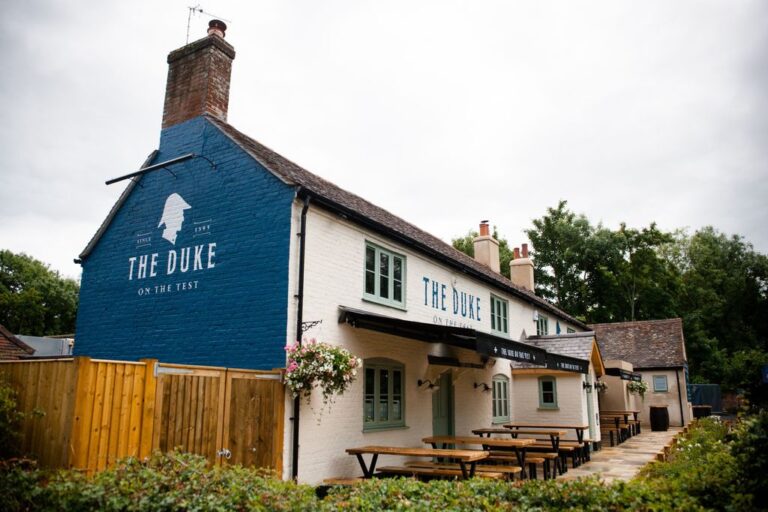
We suggest bringing a picnic or if you prefer, we can take you to the local pub. For something special, our delightful range of riverside hampers are also available to preorder.
The million dollar question! Of course it depends on the season, but generally we suggest a good mix of dry flies and nymphs in the S14 – S16 range. Your fishing guide will come with all the flies required for your day, but if you would like to bring your own, our boxes will always feature a generous pinch of Blue Winged Olives, Parachute Adams’, Sawyers Pheasant Tail Nymphs, and Peeping Caddis.
Your fishing guide will come fully equipped with all the tackle and equipment required, but if you have your heart set on using your own, we suggest a rod in the 3 to 5 weight range, paired with an arbor reel, and a floating fly line. It is also wise to carry a pouch of tapered leaders in the 9ft to 12ft / 4x to 6x range to cover all basis.
Gratuity is not obligatory, but always very much appreciated. As a guideline, 10% to 15% of your guide fee is a good starting point.
Sadly, we cannot cancel or postpone your booking under any circumstances. However, if you are unable to attend your day, please let us know at your earliest convenience and we will endeavour to resell the booking for you. If we are successful, you will be eligible for a credit to the full value of your booking, valid for 24 months, or a refund minus a 25% admin fee.